Blog

Guides & Tips

Practical guides for choosing tack, caring for your horse, and understanding everyday nutrition and grooming essentials.

Browse Guides & Tips Blog 4 articles
  1. 01 Beginner Rider Equipment Checklist
  2. 02 Fly Protection Guide for Cyprus Weather
  3. 03 Supplements to Support Joints and Muscles
  4. 04 Horse First-Aid Kit Essentials
Beginner Rider Equipment Checklist

Beginner Rider Equipment Checklist

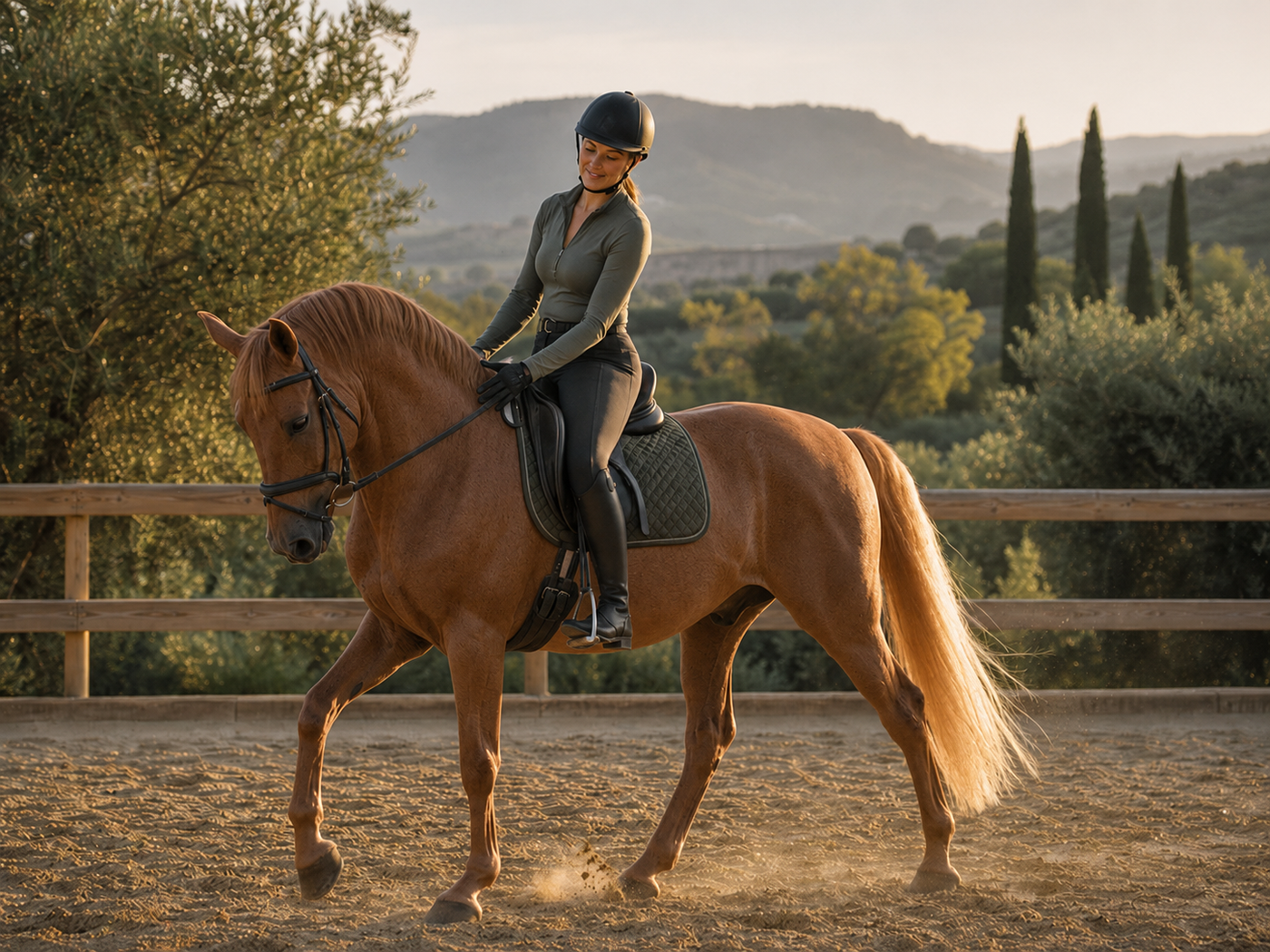
A simple guide to the essential riding equipment every beginner should consider, what each item is used for, and what to look for when choosing it.

The most important items are those that help keep you safe, comfortable, and properly supported in the saddle.

Start with safety

A correctly fitted riding helmet should be your first priority. It should sit securely and evenly on your head without moving, pinching, or feeling uncomfortable. Always choose a helmet that meets an appropriate current safety standard and replace it after a significant impact.

Suitable footwear is also essential. Riding boots should have a small heel to help prevent the foot from slipping through the stirrup. Avoid trainers, sandals, or boots with thick, heavily textured soles when riding.

Beginner riding essentials

  • Riding helmet for protection in the event of a fall.
  • Riding boots with a small heel and a secure, comfortable fit.
  • Riding breeches or jodhpurs for flexibility and comfort in the saddle.
  • Riding gloves to improve grip and protect the hands from rubbing.
  • Fitted top or base layer that allows comfortable movement.
  • Body protector, for safety.

Useful extras

A few additional items can make lessons more comfortable and practical as you begin riding regularly.

  • Long riding socks to wear comfortably under riding boots.
  • Weatherproof jacket for colder or wet conditions.
  • Hair net or hair ties to keep long hair neat and secure.
  • Small riding bag for gloves, water, keys, and personal items.
  • Boot bag or helmet bag to protect your equipment between lessons.

What to avoid

Loose clothing, scarves, large jewellery, and unsuitable footwear can become caught or create unnecessary risks around horses. Clothing should be comfortable and close-fitting without restricting movement.

Take a look at the recommended products below for some helpful examples of beginner riding essentials. These are simply suggestions, so you can mix and match different colours, styles, and options to suit your personal preferences and riding needs.
Fly Protection Guide for Cyprus Weather

Fly Protection Guide for Cyprus Weather

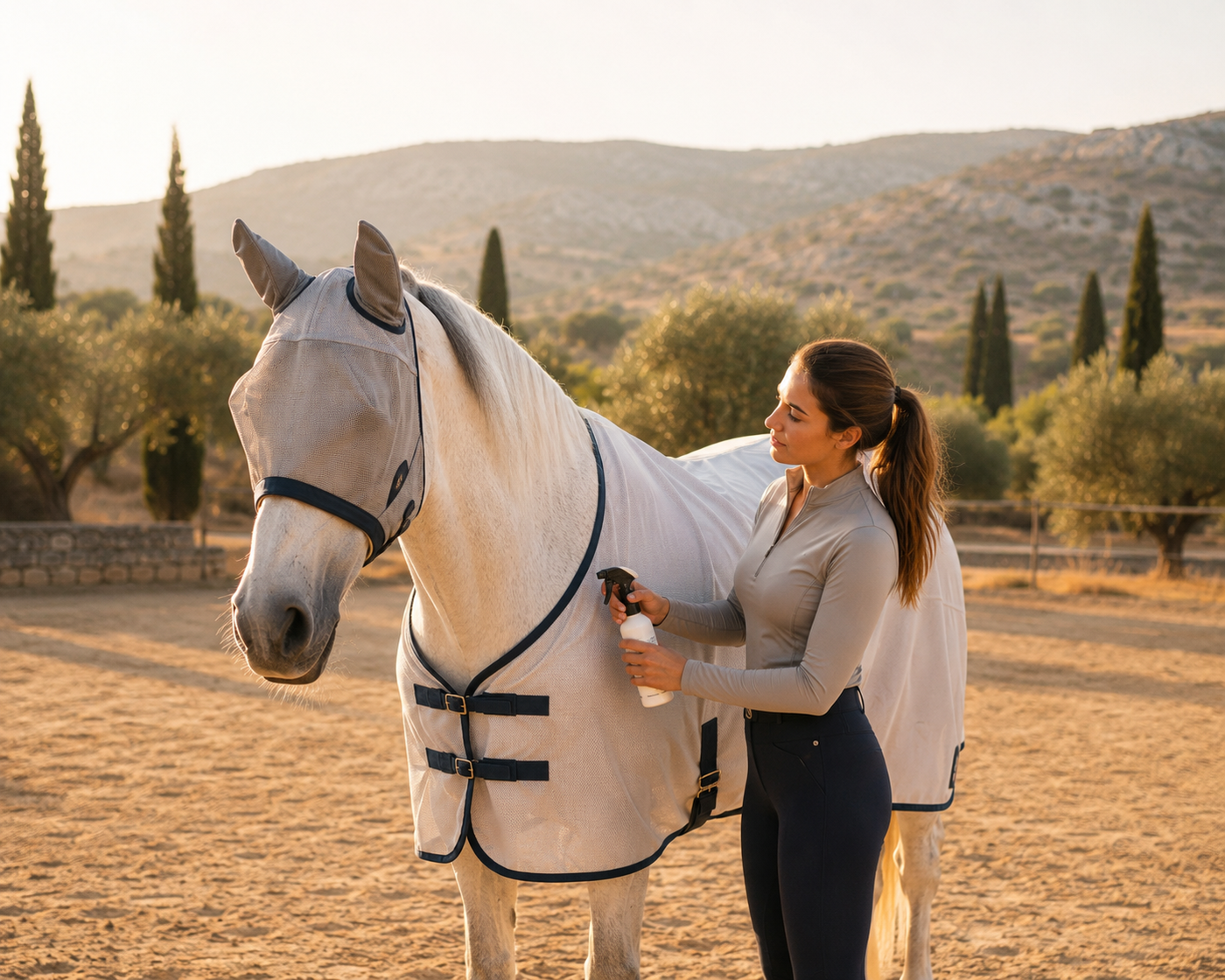
Cyprus weather can bring strong fly activity, especially during the warmer months. Using a combination of repellent and physical protection can help keep your horse more comfortable.

Fly protection essentials

  • Fly spray, gel, or roll-on for daily protection and targeted application.
  • Fly rug for lightweight, breathable body coverage during turnout.
  • Fly mask to protect the eyes, face, and ears.
  • Fly veil to help reduce irritation around the ears while riding.

Always check that rugs and masks fit correctly and do not rub. Reapply repellent when needed, especially after sweating or washing.

Regularly removing manure, cleaning buckets, and reducing standing water can also help keep flies under control.

Recommended products

Take a look at the recommended products below for some useful fly protection options. These are simply examples, so you can choose the combination that best suits your horse’s needs and routine.

Supplements to Support Joints and Muscles

Supplements to Support Joints and Muscles

Regular exercise, training, age, and competition can place extra strain on a horse’s joints, tendons, ligaments, and muscles. A suitable supplement can provide additional nutritional support alongside a balanced diet, correct training, regular farriery, and veterinary care.

Choosing the right support

The VetNova TITANIUM range includes different formulas depending on your horse’s needs:

  • TITANIUM FlexGuard MSM contains high-purity MSM, a source of organic sulphur involved in collagen production. It is designed to support joint comfort, flexibility, tendons, and ligaments, making it suitable for horses in training as well as older horses.
  • TITANIUM FlexGuard Synergy combines MSM with vitamin C to support connective tissue, joint flexibility, and antioxidant protection. VetNova recommends it for horses in training.
  • TITANIUM FlexGuard Gold provides more complete joint support with glucosamine, MSM, and vitamin C. It is intended for high-performance horses or horses with greater joint and cartilage-support needs.
  • TITANIUM Performance Mass is a muscle-support supplement rather than a joint supplement. It contains BCAAs, essential amino acids, L-carnitine, beta-alanine, vitamins, and minerals to support muscle maintenance, development, and recovery in working horses.

When might a supplement help?

Joint and muscle supplements may be useful for horses in regular work, intensive training, competition, recovery periods, or later life. The most suitable formula depends on the horse’s age, workload, diet, and individual requirements.

Supplements should not replace a balanced feeding programme or professional care. Always follow the recommended feeding instructions and speak with your veterinarian or equine nutritionist when your horse has pain, stiffness, an injury, or an existing medical condition.

Recommended supplements

Take a look at the recommended products below for examples of joint and muscle support from the VetNova TITANIUM range. Each formula has a different purpose, so choose according to your horse’s workload and individual needs.

Horse First-Aid Kit Essentials

Horse First-Aid Kit Essentials

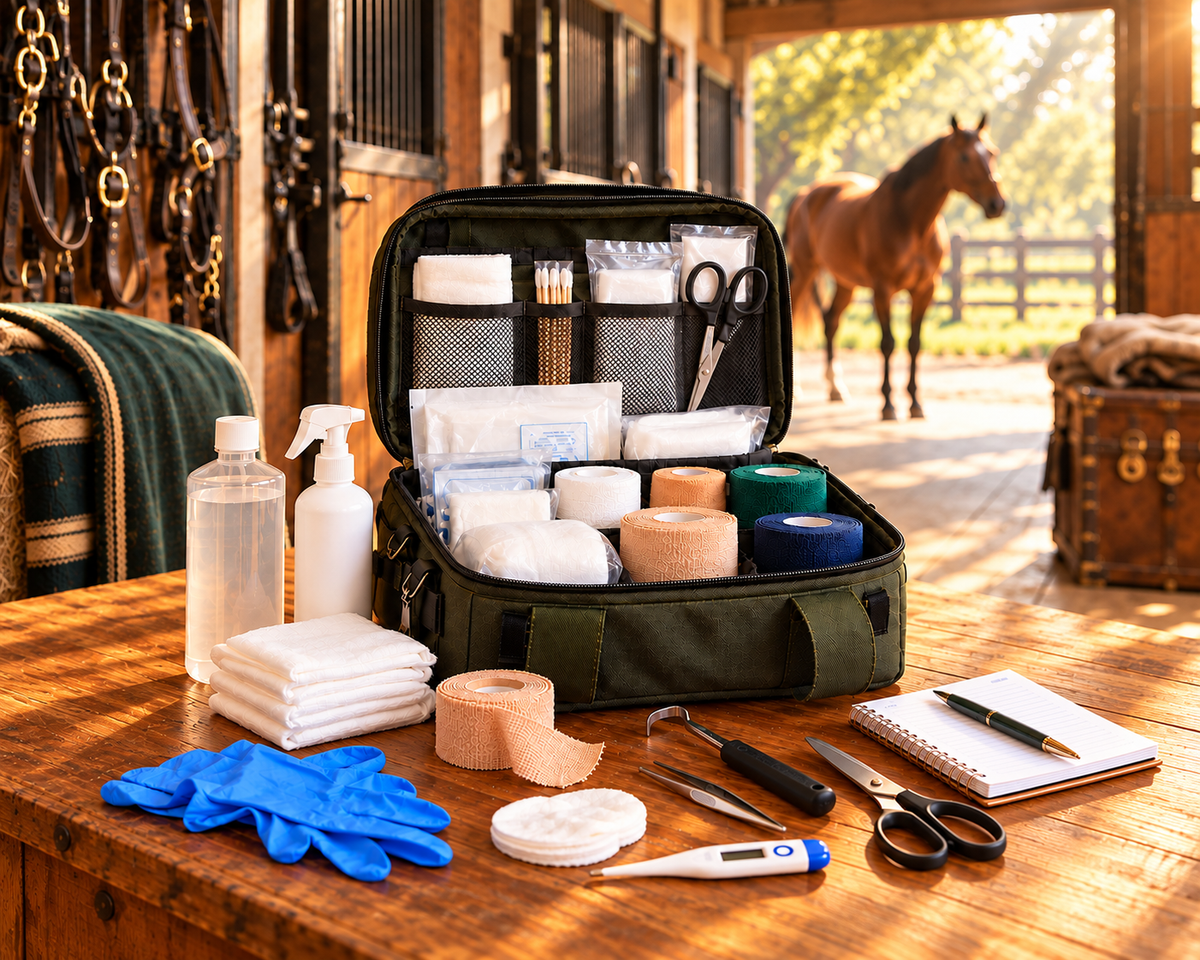
A simple checklist of essential items every horse owner should keep in their first-aid kit for everyday cuts, scratches and minor injuries.

Every horse owner should have a simple, well-stocked first-aid kit ready for everyday cuts, scratches and minor injuries.

1. Digital Thermometer

A digital thermometer is useful for checking your horse’s temperature if they seem unwell.

Keep it clean and stored safely between uses.

2. Disposable Gloves

Disposable gloves help keep wounds clean and reduce contamination while cleaning or dressing an injury.

3. Sterile Gauze

Sterile gauze is useful for gently cleaning wounds or applying light pressure when needed.

Keep several packets in your first-aid kit.

4. Bandage Padding

Bandage padding, such as gamgee or veterinary padding, is useful when an area needs extra protection or bandaging.

5. Cohesive Bandage

Self-adhesive veterinary wrap is useful for securing padding and dressings.

It sticks to itself rather than directly to your horse’s coat.

6. Blunt-Ended Scissors

A strong pair of blunt-ended scissors is useful for safely cutting gauze, padding and bandages.

7. Clean Water or Saline

Clean water or saline can be used to gently flush dirt and debris from minor cuts and scratches before applying any suitable wound-care products.

8. Hoof Pick

A hoof pick is another essential to keep close by.

It allows you to check your horse’s feet and remove stones, mud or packed bedding.

9. Wound & Skin Sprays

Keeping a few suitable wound and skin-care sprays in your first-aid kit can be very useful for minor cuts, scratches and irritated areas.

Useful options can include:

  • Aluminium spray – helps create a protective barrier over superficial cuts and scratches.
  • Zinc oxide spray – helps protect irritated or damaged skin from moisture, dirt and other external factors.
  • Antiseptic or wound-cleansing spray – useful for cleaning and caring for minor superficial wounds.

Always follow the directions on the individual product and avoid spraying near the eyes or other sensitive areas.

Keep Your First-Aid Kit Organised

Store everything together in a clean, dry box or bag that is easy to access.

Check your kit regularly and replace anything that has been used, damaged or has expired.

Basic Horse First-Aid Kit Checklist

  • Digital thermometer
  • Disposable gloves
  • Sterile gauze
  • Bandage padding
  • Cohesive bandages
  • Blunt-ended scissors
  • Clean water or saline
  • Hoof pick
  • Aluminium spray
  • Zinc oxide spray
  • Suitable wound-cleansing spray

Having these basics ready can make dealing with everyday minor injuries much easier.

Explore Horse Care & Health at Horse Shop CY for everyday horse-care products and first-aid essentials.